Cranes have been used since the time of the Ancient Greeks. In those days, cranes were powered by men or animals, using a mechanical advantage to do heavier than human lifting. Today, we see cranes mostly in the transport industry; for lifting cargo on to trucks, trains, and ships, and in the construction industry; to lift large portions of buildings and towers into place. Modern cranes use any combination of combustion engine, electric motors, and hydraulic cylinders to accomplish the function of lifting more efficiently and safely.
History of Cranes: From Ancient Greece to Modern Applications
Early cranes utilized ropes, sheaves and levers to manipulate the mechanical advantages. These cranes were simple structures, made from wood. Over time, they evolved into stone buildings, and iron structures for loading goods onto ships and carts. Some early wooden crane structures could be moved as needed, and then anchored in place. This was common in building large structures. Even though cranes have evolved significantly over hundreds of years to be more efficient, modern cranes use the same principals as those first used by the Ancient Greeks.
Modern cranes come in all shapes and sizes. Mobile cranes can be mounted on; crawlers (vehicles with wide treads to help crawl over rough or soft terrain) , trucks, tractors, and trailers. Stationary cranes can be mounted on loading docks, buildings, and towers. Some cranes have arms that can telescope out to be usable over a larger area, while others can bend and change shape to fit in smaller spaces. The principals behind how all cranes work is pretty much the same, use a mechanical advantage to lift an object up, over, or both. Let’s take a look at the role hydraulic cylinders play in modern cranes.
The Introduction of Hydraulic Cylinders in Crane Technology
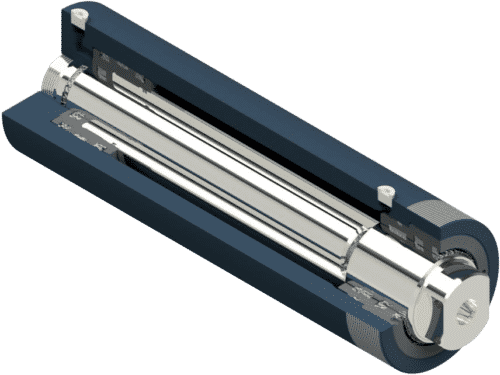
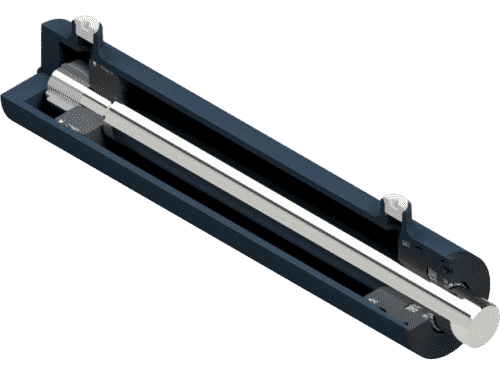
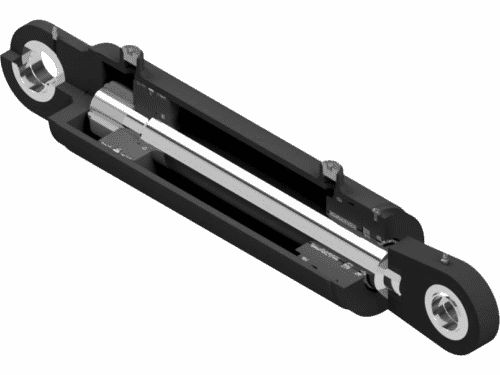
The first use of hydraulic cylinders in cranes occurred in the mid 1800’s. A hydraulic cylinder was connected to a series of sheaves to multiply the movement of rope or chain for lifting. What was previously accomplished by hand, could now be done much safer and efficiently by the use of hydraulics. Early cranes could lift up to five tons and hold it safely overhead, which made loading goods on ships and trains for commerce much faster and safer.
Modern cranes come in all shapes and sizes. Manufacturers mount mobile cranes on crawlers (vehicles with wide treads that crawl over rough or soft terrain), trucks, tractors, and trailers. They mount stationary cranes on loading docks, buildings, and towers. Some cranes have arms that can telescope out to be usable over a larger area, while others can bend and change shape to fit in smaller spaces. The principals behind how all cranes work is pretty much the same, use a mechanical advantage to lift an object up, over, or both. Let’s take a look at the role hydraulic cylinders play in modern cranes.
Hydraulic Cylinders in Stationary and Self-Erecting Tower Cranes
Stationary cranes remain very common in industry and construction today. They operate under the same fundamental principles as their mobile counterparts, relying on hydraulics to position the crane arm, rotate it left or right, and in some cases provide a safe and controlled method for managing cables and sheaves during lifting. Cranes frequently sit atop tall tower structures to reach even greater working heights. This design seamlessly combines sophisticated construction engineering with the science of heavy lifting.
Some stationary cranes are self-erecting, a particularly impressive feature. These units start on a compact base platform. They use hydraulics and mechanical advantage to build themselves upward as the job demands. The process typically raises a new mast section into position. Then, the crane’s climbing frame or mechanics shift upward onto that new section. This sequence repeats until the crane reaches its required maximum height. When the project ends, the crane disassembles itself through the exact reverse process. In these designs, hydraulic cylinders go far beyond standard lifting tasks. They deliver critical performance throughout the climbing phases. They also deliver critical performance throughout the dismantling phases. Their inherent reliability and exceptional power density let operators trust them completely, even in extreme, high-stakes applications.
If you’d like more information on Aggressive Hydraulics and how we support the crane industry contact one of our Hydraulic Cylinder Specialists® at (866) 406-4100, or check out our cranes page for more information. Let them do the heavy lifting for you!